The Payment Animation Widget is a motion-driven micro-interaction designed to enhance clarity, trust, and emotional reassurance during digital transactions. Payment moments are among the most sensitive interactions in any product — users are sharing financial information, committing to purchases, or transferring funds. Even a slight delay or unclear system response can create anxiety and doubt.
This project explores how thoughtful motion design can transform a traditionally static and mechanical payment state into a guided, intuitive, and emotionally confident experience. Rather than treating animation as decoration, the goal was to use motion as a communication layer — one that visually explains system status, reduces cognitive friction, and elevates perceived product quality.
Payment Animation Widget.
Designing Trust Through Motion in High-Stakes User Interactions
Trying to solve
In many digital platforms, payment confirmation is handled with generic loaders, spinners, or abrupt state changes. These patterns often lack meaningful feedback, making users question whether the system is functioning correctly. The “processing” state, in particular, becomes a moment of uncertainty rather than reassurance.
The core issue is not visual design — it is feedback design. When system status is unclear, users experience increased cognitive load. They may retry actions, abandon transactions, or lose trust in the platform. This becomes especially critical in fintech, e-commerce, and SaaS environments where transaction confidence directly impacts business metrics.
The challenge, therefore, was to design a micro-interaction that communicates system behavior clearly while maintaining emotional comfort and product elegance.
Design Objectives
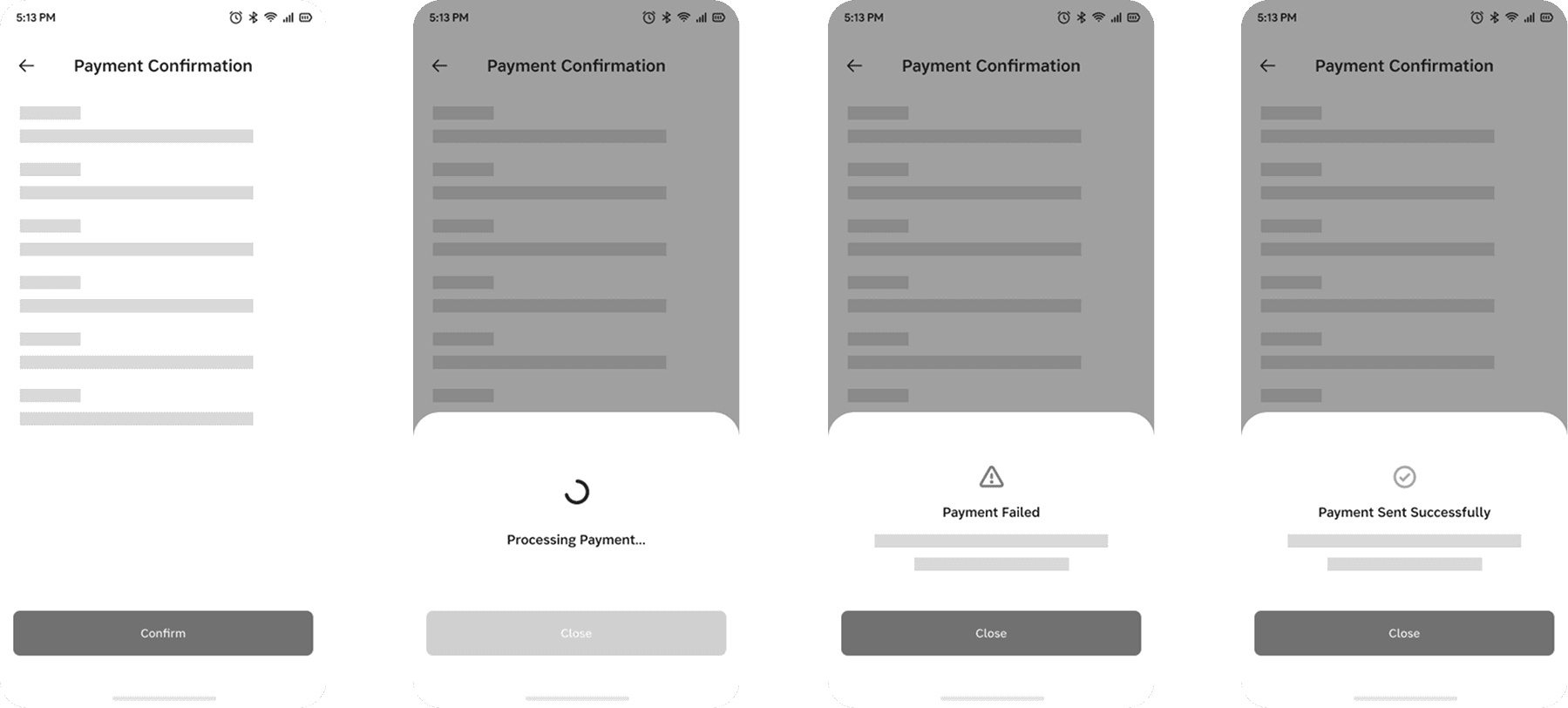
The primary objective was to create a responsive animation system that clearly represents different payment states: initiation, processing, success, and error. Each state needed to feel intentional, visually distinct, and logically connected to the previous one.
Another important goal was to enhance perceived performance. Research consistently shows that well-designed motion can make wait times feel shorter. Instead of showing users that the system is “loading,” the animation should visually demonstrate that the system is actively working.
Additionally, the solution needed to remain lightweight, accessible, and scalable. The widget should be adaptable to multiple product environments without compromising performance or usability.
Research & Insights
To inform the design direction, I analyzed interaction patterns across modern fintech applications, e-commerce platforms, and digital wallets. Particular attention was given to how leading products use motion to convey system feedback and instill confidence.
A key insight from research was that animation timing significantly influences perceived responsiveness. Transitions between 200–400 milliseconds feel immediate and fluid, while longer or overly complex animations create friction. Users do not want entertainment during payment — they want reassurance.
Another insight was emotional continuity. Abrupt changes between states (for example, instant switches from processing to success) can feel mechanical. Gradual and visually connected transitions help users cognitively link their action to the result.
These insights shaped the overall motion strategy: clarity, speed, continuity, and emotional reassurance.
Design Strategy
The widget was built around a state-based interaction model. Each animation is triggered by a defined system state rather than arbitrary motion. This ensures that every movement has purpose and meaning.
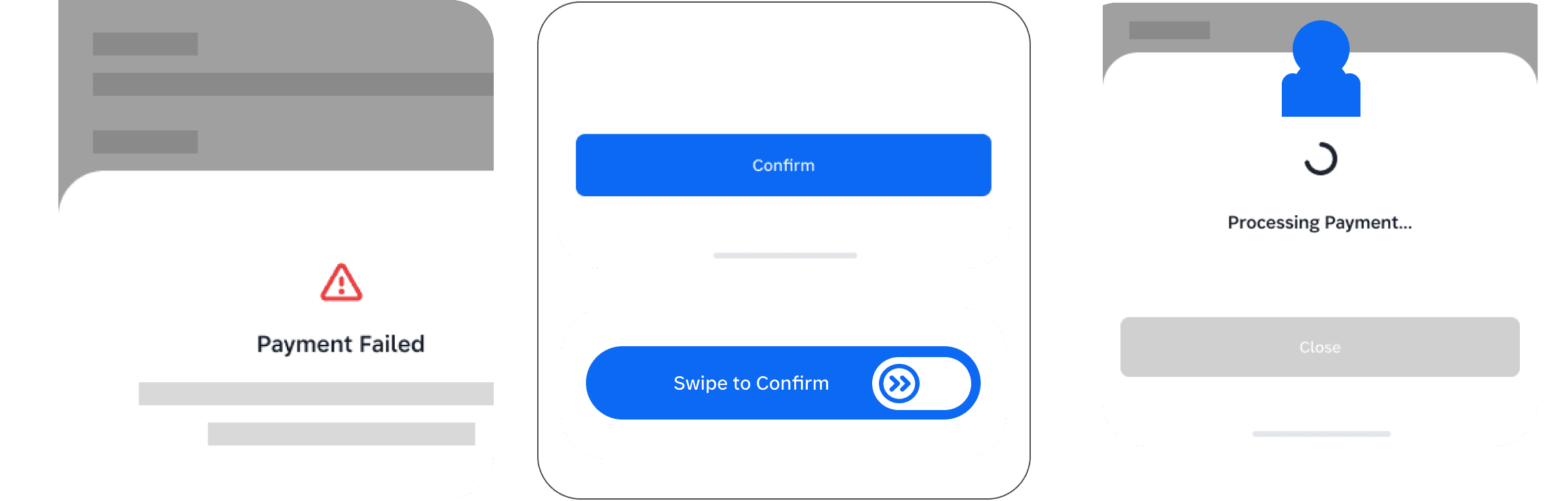
The initiation state establishes user control. Once the payment is triggered, the interface transitions into a processing state using progressive motion cues that indicate active system behavior. This replaces static spinners with intentional motion that communicates progress.
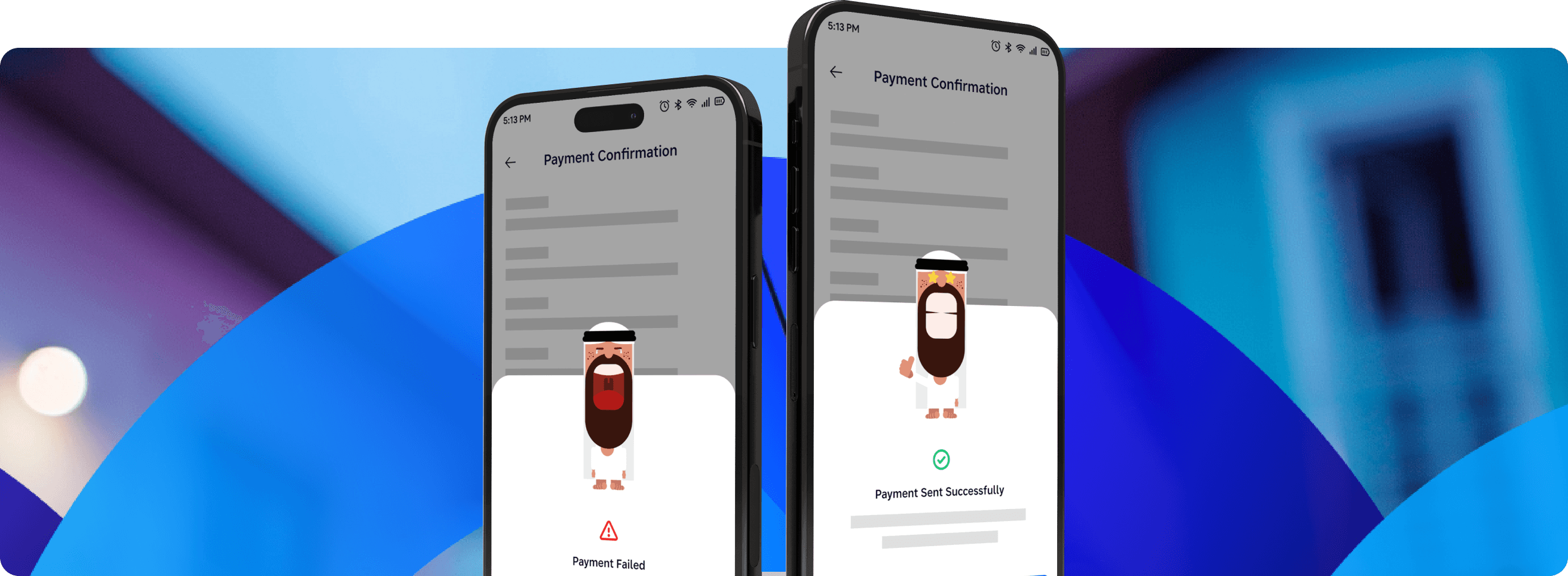
The success state delivers emotional closure. Rather than simply displaying a checkmark, the animation reinforces completion through subtle celebratory motion — controlled and refined, not exaggerated. The goal was to create satisfaction without theatrics.
Error states were designed to maintain clarity without inducing panic. Motion is minimal but noticeable, ensuring users understand the issue while feeling guided rather than blocked.
Motion Principles Applied
Several core motion design principles guided the implementation:
Purposeful Motion – Every animation supports user understanding. There are no decorative transitions without functional value.
Natural Easing – Smooth acceleration and deceleration curves were used to mimic physical motion, creating a more organic and polished feel.
Continuity Between States – Visual elements transform rather than abruptly change, helping users mentally map action to outcome.
Feedback Immediacy – There are no dead states. The interface responds instantly to user interaction, reinforcing responsiveness.
By applying these principles consistently, the widget maintains both usability and emotional refinement.
Outcome & Impact
The final Payment Animation Widget transforms a routine transaction step into a moment of clarity and confidence. Instead of waiting passively during processing, users experience visual feedback that reassures them the system is functioning correctly.
The solution demonstrates how micro-interactions can significantly influence perception. Even small animation details contribute to the overall impression of product quality, technical sophistication, and reliability.
From a product perspective, this approach has the potential to reduce transaction anxiety, minimize repeat taps, and increase user trust — especially in environments where financial confidence is critical.
Key Learnings
This project reinforced the idea that motion is a communication tool, not a decorative layer. In high-stakes interactions like payments, subtlety and intention matter more than visual flair.
It also highlighted the importance of restraint. The most effective animations are often the ones users barely notice — because they feel natural, intuitive, and aligned with expectation.
Finally, designing micro-interactions requires thinking beyond visuals. Emotional psychology, timing precision, and system logic all play a crucial role in creating meaningful motion experiences.
Future Scope
Future iterations could include adaptive animations that respond to network speed or transaction duration. For example, longer processing times could subtly extend motion patterns without feeling repetitive.
The widget can also evolve into a reusable design system component, allowing seamless integration across multiple financial or e-commerce products.
User testing and behavioral analytics would further validate the impact of motion on perceived trust and transaction completion rates.
Integrating the Animation Using Rive
const riveInstance = new Rive({
src: "payment_widget.riv",
stateMachines: "PaymentStateMachine",
autoplay: true,
});
function handlePaymentStart() {
riveInstance.stateMachineInputs("PaymentStateMachine")
.find(input => input.name === "Start")v
.fire();
}
function handlePaymentSuccess() {
riveInstance.stateMachineInputs("PaymentStateMachine")
.find(input => input.name === "Success")
.fire();
}
function handlePaymentError() {
riveInstance.stateMachineInputs("PaymentStateMachine")
.find(input => input.name === "Error")
.fire();
}
Accessibility & Performance Considerations
Performance optimization was a key focus. Animations were designed to be lightweight and efficient to ensure smooth rendering across devices, including lower-performance environments.
Accessibility was also integrated into the design process. Motion intensity and duration were carefully balanced to avoid overwhelming users. The system respects reduced-motion preferences, ensuring inclusivity for users sensitive to animated interfaces.
This balance between delight and discipline ensures that motion enhances usability rather than distracting from it.
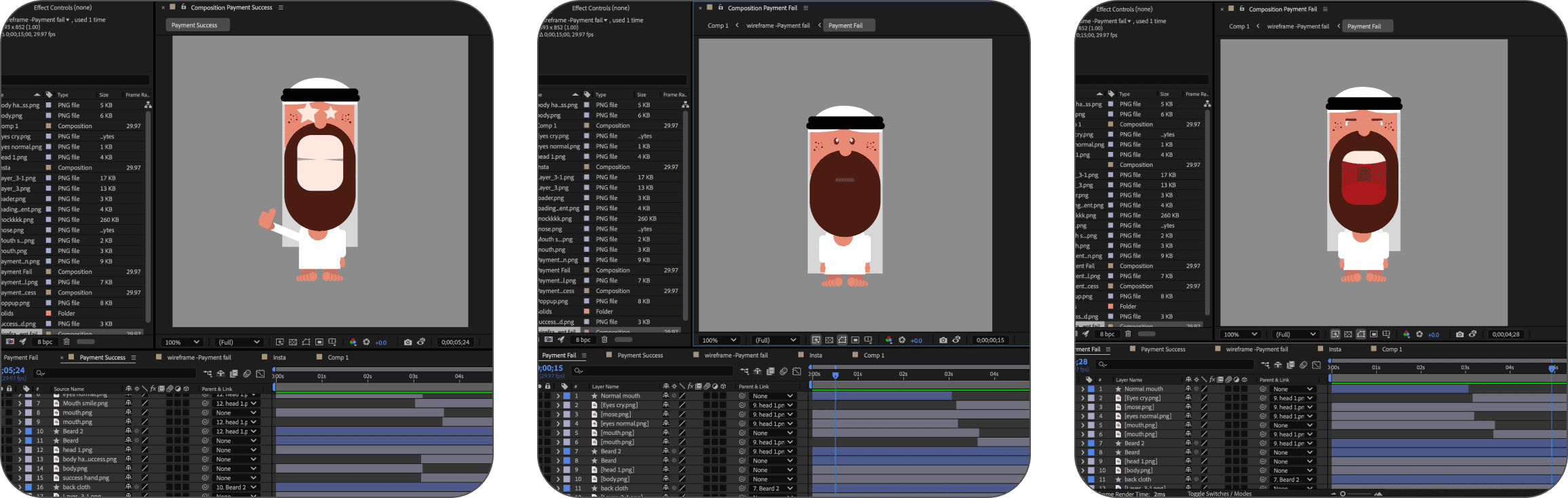
To ensure the Payment Animation Widget could move beyond a prototype and function reliably in production environments, the animation system was structured for implementation using Rive. Unlike timeline-based animation tools that export static sequences, Rive enables real-time, interactive animations driven by application logic.
The widget was designed using a state-machine architecture, allowing animation states such as Idle, Processing, Success, and Error to be controlled dynamically through triggers and boolean inputs. This ensures that the animation responds directly to real system events rather than playing pre-defined sequences. By aligning motion states with backend payment statuses, the animation becomes an extension of product logic rather than a visual overlay.